

Where the Heart Registers
My adult daughter contacted us yesterday with a small piece of news.
She has recently moved from Queensland to Tasmania, and today she was going to the motor registry to hand in her Queensland number plates and receive new Tasmanian ones.
Nothing unusual in that. Thousands of people do the same thing when they move interstate. It is one of those mundane administrative tasks that must be attended to when life takes us somewhere new.
But then she said something that stopped me.
She felt sad about surrendering her Queensland plates.
"Surrendering.*
It was an odd word to use for a pair of number plates. She wasn't surrendering her car, after all. She was simply registering it in another state.
Yet I understood what she meant.
Or at least, I began to wonder whether I did.
Those plates had been part of her life in Queensland. They had travelled the roads she knew, past places that had become familiar, through ordinary days and memorable ones. They belonged to a chapter of her life that was now, in some small but tangible way, behind her.
I found myself thinking about how we come to belong to a place, and how strange it is that something as insignificant as a set of number plates can make us feel the weight of leaving something behind.
Because we don't just live in places.
Sometimes, places become part of us.
More than a place on a map
I've been asked whether I feel Australian.
My answer might surprise some people.
I was born in New Zealand. I came to Australia in the 1970s. Yet if you ask me where I belong, I won't hesitate.
I'm a Queenslander.
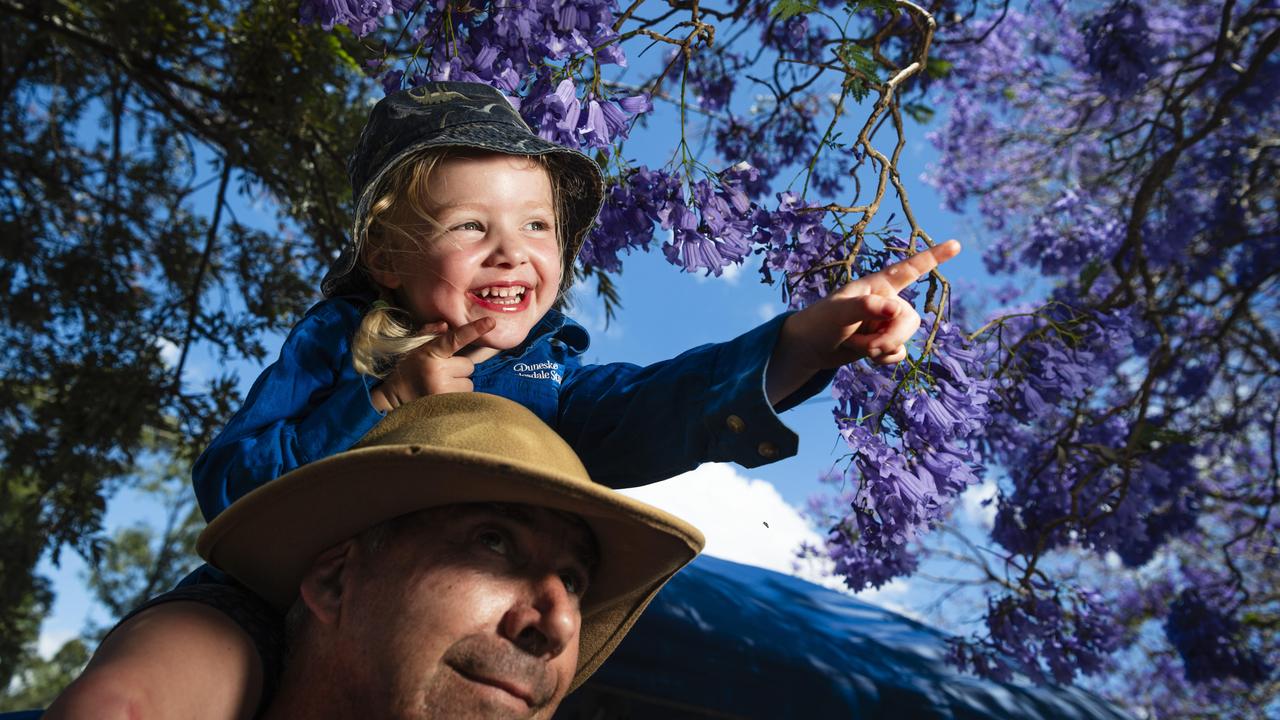
Jacarandas mean summer is coming.
Not just a tree. Not just a splash of purple. A promise.
The days are warming. The year is turning. The familiar world is moving towards a season we know by heart. We see those blossoms and, without needing to think about it, we know what comes next.
Not because of a certificate, a passport or a registration number. Not because I believe Queensland is perfect, or that everywhere else is somehow inferior.
It's simply where my roots took hold. It is home.
There is something about a place that gets under your skin. Its landscape, its weather, its particular way of doing things. The expressions people use, the roads you can travel without thinking, the familiar sights that would mean nothing to a stranger but somehow mean everything to you.
You don't necessarily notice it happening.
You just live your life. You make friends. You collect memories. You learn which roads lead where, which places hold happy memories, and which corners of the world feel as comfortable as an old pair of slippers.
Then one day someone asks where you're from, and you discover that the answer isn't quite as simple as the place printed on your birth certificate.
Where we are born is a fact.
Where we belong can be something else entirely.
The things we don't realise we own
Perhaps that is why my daughter's remark struck such a chord.
We tend to think of identity in terms of the big things. Our birthplace, our nationality, our family name, our citizenship. The official records that tell the world who we are and where we came from.
But much of our identity is built from smaller things.
The familiar bend in a road. The smell of the bush after rain. The sound of a local expression that would leave someone from another part of the world completely bewildered. The corner shop, the old pub, the beach, the mountain range, or the sight of a particular tree that tells us we are nearly home or a bird calling in the morning.

These things rarely appear on a form.
Nobody asks us to list the memories that bind us to a place when we change our address. There is no box to tick for the friendships formed, the hardships endured, the children raised, the disappointments survived or the quiet moments of happiness that have accumulated over the years.
Yet these are the things that make a place ours.
We don't own them in any legal sense. We cannot put them in a removal truck or hand them over a counter.
But they belong to us all the same.
And perhaps that is why leaving can sometimes feel like a loss, even when the move is entirely our own choice.
The head understands the practicalities. The heart is not always so efficient.
Can you surrender a home?
Of course, Queensland hasn't disappeared from my daughter's life. Nor has Tasmania suddenly become less welcoming because she has had to hand in a set of plates.
She can return to Queensland whenever she wishes. She can keep her memories, revisit familiar places and maintain the friendships she made.
Tasmania may, in time, become every bit as much home to her as Queensland once was. Like the trusty poinciana that flowers at Christmas, she may find a new Christmas tree.

Perhaps that is the reassuring part of all this.
Belonging is not a finite resource. We don't have to stop loving one place before we can love another.
But transitions have a way of making things real.
A move can remain an abstract idea until the last box is packed, the old keys are handed over, or the number plates that have travelled with us for years are surrendered across a counter.
And perhaps that is the curious thing about home.
Maybe it was the moment we realised that the place we had always called home would now be somewhere we visited rather than somewhere we lived.
You can change the plates on your car. You can change the address on your mail. You can even change the country you call home.
But you cannot change the place that answers when your heart asks where you belong.
BLOG COMMENTS POWERED BY DISQUS


