

Port Arthur Was the Horror. What Followed Was a Mistake.
I was 3,000 kilometres away, teaching in a small town in New Zealand, when the news broke on 28 April 1996.
Images from Tasmania. Thirty-five dead. Twenty-three wounded. Families. A café.
The horror was undeniable.
But even then, something else settled in alongside it - a hard, unwelcome certainty.
This would not end with the crime.
As we mark another anniversary of the Port Arthur massacre, we remember the victims. We should. Their loss stands beyond argument.
What does not stand beyond argument is what came next.

Here is the official version of events.
The Port Arthur massacre, which occurred on April 28, 1996, is one of the deadliest shootings in Australian history and has had a profound impact on the country's gun laws and society.
The massacre took place at the Port Arthur historic site, a former prison in Tasmania that had become a popular tourist destination. On that day, a lone gunman, Martin Bryant, carried out a series of shootings that resulted in 35 deaths and 23 injuries.
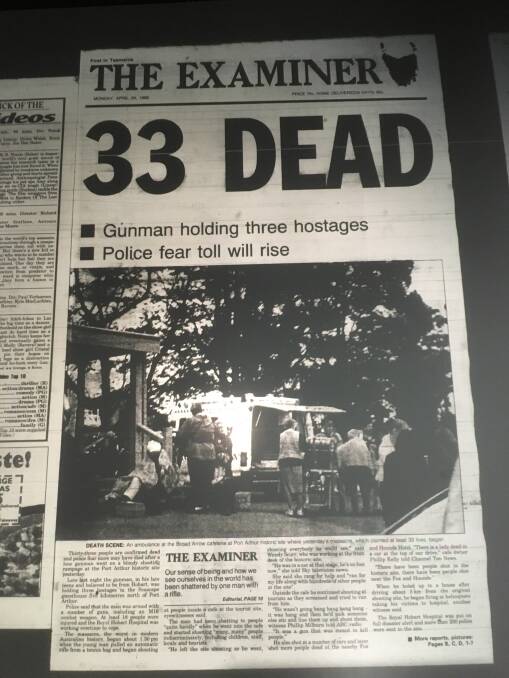
Bryant, armed with a semi-automatic rifle, began his attack at the Broad Arrow Café within the Port Arthur complex. He killed 20 people in the café before moving outside, where he continued his shooting spree. Bryant also went on to murder more victims as he drove through the area, including people at a nearby service station and a couple at a guest house.
After a prolonged police standoff, Bryant was arrested the following day. He was charged with 35 counts of murder and 23 counts of attempted murder.
Bryant was later convicted of all charges. He pled guilty to the killings in November 1996 and was sentenced to life in prison without the possibility of parole.
Martin Bryant sits at the centre of this tragedy, forever branded as the villain.
This episode originally aired in 2016.
A Nation in Shock - and a Decision Made Fast
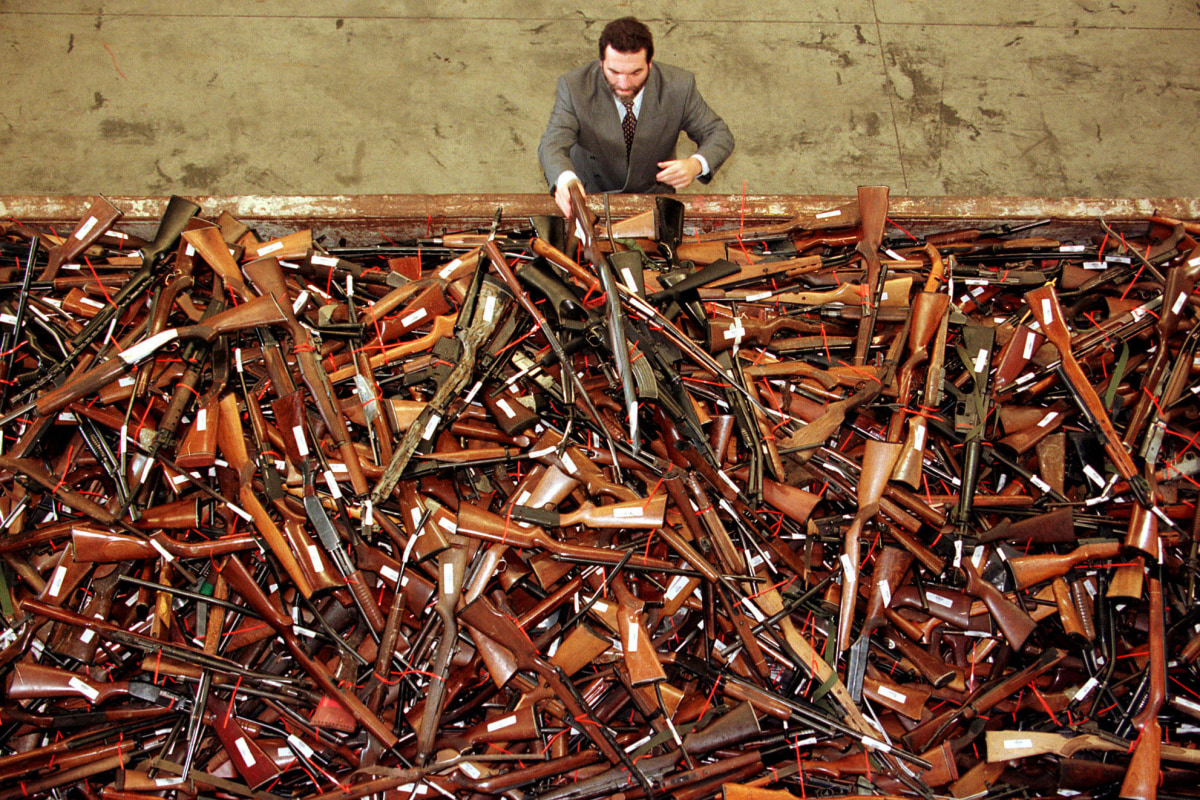
Within weeks, sweeping gun laws were imposed. Entire classes of firearms banned. Ownership tightly restricted. Self-defence dismissed outright. Hundreds of thousands of firearms surrendered.
Australians were told this was necessary.
Not debated. Not tested. Not weighed over time.
Necessary.
In the shock of the moment, many accepted it.
What I Knew Before Any Law Was Written
I grew up in the country. I had a slug gun at ten and a .22 at twelve. That wasn’t remarkable - it was just life.
Guns weren’t something we obsessed over. They weren’t symbols. They weren’t political. They were tools.
If I came across a wounded animal, I used it to end suffering. Not for sport. Not for thrill. Because it was the humane thing to do. If we shot, it was for food. That was the rhythm of it - practical, grounded, understood.
The strange thing is this: if you had put a rifle on a table next to a book, I would have picked up the book every time.
Because one had something to teach me. The other was just a tool waiting for a purpose.
That’s what’s often missing from the modern conversation. Familiarity didn’t breed fascination. It bred indifference - and with it, responsibility.
The only time we ever treated them like “weapons” was as kids, loading a slug gun with rice and staging backyard wars. And yes - those rice pellets stung like hell.
But even that says something.
We didn’t fear them. We didn’t revere them. We understood them.

The Claim - and the Reality
The claim after Port Arthur was simple: remove the guns, remove the threat.
It sounds logical. It is also incomplete.
Some may say that mass shootings of that particular kind largely disappeared. That is often presented as the full measure of success.
It isn’t.
Because violence did not disappear. It adapted - as it always does.
Different weapons. Same intent.
And while law-abiding Australians complied, those willing to break the law did not suddenly become obedient. Illegal weapons remained. Criminals remained armed.
At 9:41am on Monday, 15 December 2014, Man Haron Monis forced Tori Johnson, the manager of the Lindt Café in Sydney’s Martin Place, to call 000 and say that an Islamic State operative had taken hostages armed with a gun and explosives.

The effect was not to eliminate danger, but to shift the balance - away from those who follow the rules, and toward those who do not.
The Trade That Was Made
Something deeper changed.
Before 1996, there was an understanding- sometimes unspoken, but real – that responsibility for safety began with the individual.
After Port Arthur, that shifted.
Protection became something expected from the state, rather than something held, even partly, by the citizen.
That change did not come through careful, measured debate. It came quickly, carried by grief and urgency.
And once made, it hardened into something close to unquestionable.
The Cost We Don’t Name
The cost was not just in firearms surrendered.

Image AI generated.
It was in independence.
In the quiet erosion of the idea that ordinary people could be trusted with responsibility.
In its place came something else: a belief that safety can be delivered, that risk can be legislated away, that removing tools removes intent.
But reality does not work that way.
Violence still exists. People are still harmed. Public spaces are not immune. Homes are not immune.
The promise was certainty.
What followed was compromise.
What We Owe the Truth
The victims of Port Arthur deserve respect.
They do not need a fixed narrative.
Questioning the response to a tragedy does not diminish the tragedy.
Thirty years on, it is reasonable to say this plainly:
The response was not inevitable.
It was not beyond question.
And it was not, in all respects, justified.
The Line That Was Crossed
Looking back, the defining moment was not only the day of the attack.
It was the moment a grieving nation accepted that fundamental responsibilities could be surrendered in exchange for the promise of safety.

That was the real turning point.
Not the crime itself - but the decision that followed it.
Port Arthur was the horror.
What followed was a choice.
And thirty years later, it is a choice that still demands to be examined - clearly, honestly, and without apology.
BLOG COMMENTS POWERED BY DISQUS


