

In many Western countries today, we often speak of multiculturalism as though traditions no longer matter - as though every custom is equally temporary and interchangeable.
Yet history suggests otherwise.
A society without shared customs gradually loses the common experiences that bind strangers into neighbours and citizens into a people.
Christmas, weddings, national commemorations, shared stories, familiar songs, local ceremonies, even the simple expectations of family life - all of these help create a common culture.
They provide continuity between grandparents and grandchildren, newcomers and old families alike.
Queen Victoria and Prince Albert never imagined that choosing a white wedding dress or decorating a Christmas tree would influence millions of families around the world. Yet their example reminds us of a timeless truth. Culture is not preserved because governments decree it, nor because historians record it. It endures because ordinary people decide that something is beautiful, meaningful and worth passing on. Every tradition was once new. Every tradition can one day be forgotten. The future of our own traditions depends on what we choose to hand to those who come after us.
How Traditions Are Born: The Enduring Influence of Queen Victoria and Prince Albert
Many traditions feel ancient. We assume they have been passed down through countless generations, emerging from the distant mists of history.
Yet many of the customs we now consider "traditional" are surprisingly recent. They often begin with a simple personal choice made by someone whose influence reaches far beyond their own family. If the idea captures the public imagination, it is copied, repeated, and eventually becomes so familiar that people forget it ever had a beginning.
Few people demonstrate this better than Queen Victoria and Prince Albert.
Their marriage in 1840 did more than unite two royal houses. Through newspapers, engravings and later photography, the public watched the young royal couple build what appeared to be an affectionate, devoted family life. Their private preferences became public inspiration, and before long those choices had evolved into traditions still followed across much of the world today.
The White Wedding Dress
Before Victoria's wedding, there was no universal colour for a bride's gown. Most women simply wore their best dress...often in blue, silver, pink, or richly coloured fabrics that could be worn again.
Victoria surprised many by choosing a simple white satin gown trimmed with exquisite Honiton lace. Rather than appearing in elaborate state robes befitting a reigning monarch, she wished to emphasise British lace-making while presenting herself as a bride rather than a queen.
/https://tf-cmsv2-smithsonianmag-media.s3.amazonaws.com/filer/e9/66/e966482c-1b75-4871-a7db-5ee54f32943c/12_05_2014_victoria_wedding.jpg)
Illustrations of the ceremony circulated throughout Britain and beyond. Brides quickly began copying the elegant white gown, and over time white became associated with romance, purity and the wedding ceremony itself.
Today, millions of brides still wear white, largely because one young queen decided she preferred simplicity over royal splendour.
The Christmas Tree
Christmas trees had existed in Germany for centuries and had occasionally appeared in Britain before Victoria's reign. However, it was Prince Albert who transformed the custom into a household tradition.
Missing the Christmases of his childhood in Coburg, Albert introduced beautifully decorated fir trees into Windsor Castle. The trees were illuminated with candles and decorated with sweets, ornaments and small gifts. Most importantly, the royal family gathered around them together.
An engraving published in 1848 showing Victoria, Albert and their children celebrating around their Christmas tree proved enormously influential. Families across Britain eagerly copied the scene.
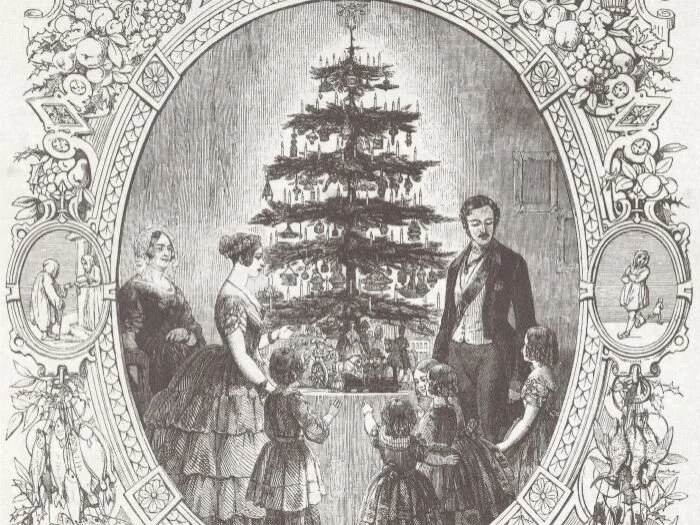
Within a generation, Christmas trees were being sold commercially throughout Britain, and the custom soon spread across the English-speaking world. Today it is difficult to imagine Christmas without one.
The Sailor Suit
Sometimes traditions begin with something wonderfully ordinary.
In 1846 Victoria commissioned a miniature Royal Navy sailor suit for her eldest son, Prince Albert Edward - later King Edward VII - to wear aboard the royal yacht.
The outfit was practical, comfortable and undeniably charming. Albert was delighted with it and arranged for a portrait to be painted.
The public loved the image.
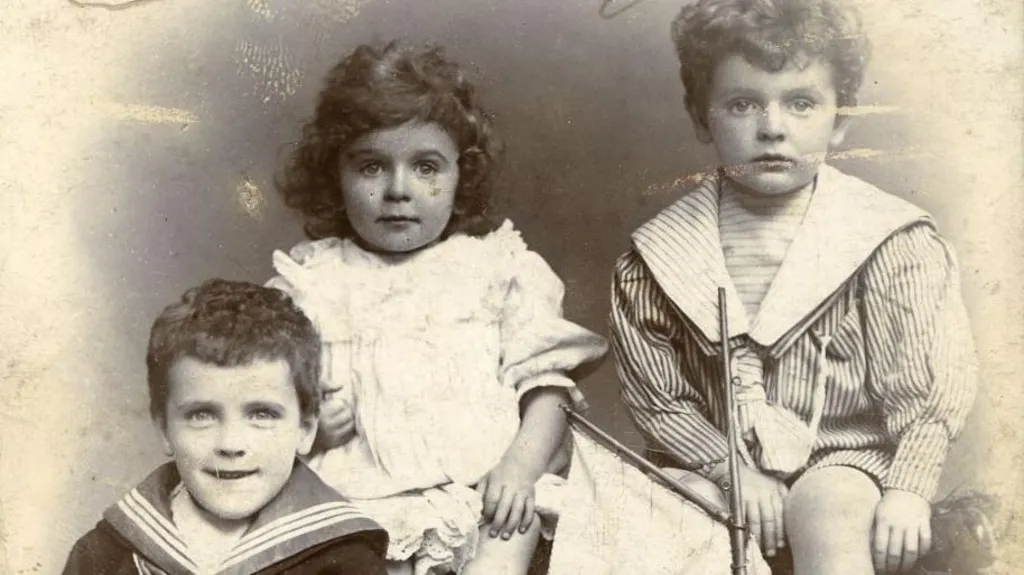
Soon fashionable families were dressing their sons - and eventually daughters in adapted versions - in sailor suits. Throughout the Victorian and Edwardian periods they became one of the defining styles of childhood, and elements of the design still appear in children's clothing today.
A single family photograph effectively launched an international fashion.
The Royal Fruitcake
Victoria and Albert's wedding cake was almost as famous as the wedding itself.
Weighing around 300 pounds, the magnificent fruitcake was richly spiced, preserved with brandy and decorated with elaborate white icing and sugar sculptures. Although fruitcake had long been popular for special occasions because it kept well, the royal wedding transformed it into the wedding cake to imitate.
Guests received slices, newspapers described it in detail, and bakers everywhere sought to reproduce the style.
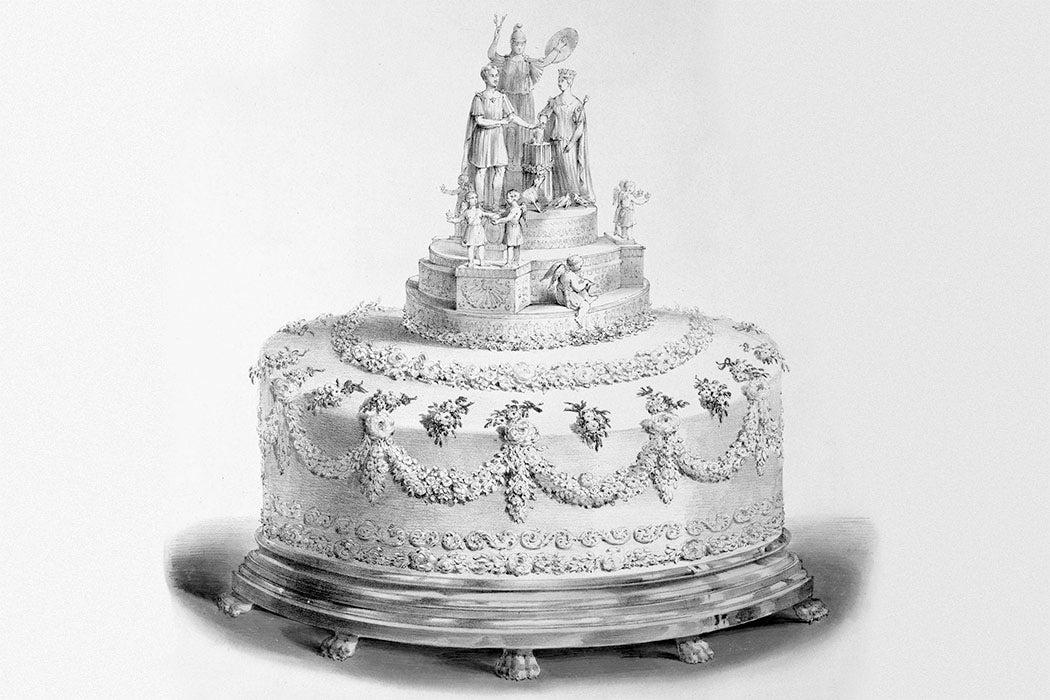
Tiered, white-iced fruitcakes became the standard for British weddings, and many royal weddings continue the tradition to this day.
Why These Traditions Endured
The remarkable thing is that Victoria and Albert never set out to invent traditions.
They simply lived publicly during a period when newspapers, illustrated magazines and affordable printing allowed millions of people to glimpse royal domestic life for the first time.
People admired what they saw.
They saw a young couple apparently devoted to one another, raising children, celebrating Christmas together and embracing family life. Their habits seemed attainable. Middle-class families copied them, neighbours copied one another, and within a generation these personal preferences had become accepted customs.
This is often how traditions are born.

They do not necessarily emerge from ancient history. They begin with ordinary human choices that happen to capture the imagination of enough people.
Whether it is a queen choosing a white wedding dress, a prince decorating a Christmas tree, a child wearing a sailor suit or a magnificent fruitcake served at a royal wedding, the pattern remains the same.
Someone starts it.
Others admire it.
Enough people repeat it.
Then, before long, everyone assumes it has always been that way.
Perhaps that is the true nature of tradition - not something frozen in the past, but something living that begins with a simple idea and quietly becomes part of our shared story.
The Fragile Nature of Tradition
Perhaps the greatest lesson from Queen Victoria and Prince Albert is not that they created traditions, but how traditions come into being, and how easily they can disappear.
Traditions are rarely imposed by governments. They grow because people admire something, imitate it, and then pass it on to their children. A white wedding dress, a Christmas tree, a sailor suit, even the style of a wedding cake all began as personal choices. They became traditions because millions of ordinary people looked at them and thought, "We'd like to do that too."
That tells us something important about culture itself.

Culture is not preserved by legislation. It is preserved by affection, imitation and habit. Laws can recognise a public holiday or protect a historic building, but they cannot make families gather around a Christmas tree or teach children why a national day matters. Those things survive only when people choose to value them.
The opposite is equally true. Traditions are not lost because they are attacked; more often, they quietly fade when they are no longer practised. Every generation decides, consciously or not, which customs are worth carrying forward.
A nation needs shared traditions that create a common identity. These are the stories, celebrations and rituals that allow people from different backgrounds to feel that they belong to the same community.
The story of Victoria and Albert reminds us that traditions are living things. They are not relics trapped in the past, but gifts handed from one generation to the next. Once that chain of transmission is broken, even the oldest customs can disappear with surprising speed.
The future of any tradition depends less on its age than on whether people still believe it is worth passing on.
Shaydee
BLOG COMMENTS POWERED BY DISQUS


