

It has been a few months since the sad passing on the 15th of November 2025 of one of our favourite posters, Viv Forbes. I still catch myself expecting to see his name beneath an article - steady, measured, and armed with that unmistakable blend of bush wisdom and scientific clarity.
I miss his wise words. I miss his common sense.
Few contributors left a mark quite like Viv - a true son of the bush.
Born in Warwick in 1939, Viv brought the practical insight of a geologist, the grit of a working farmer, and the sharp, disciplined mind of a lifelong student of economics, politics, and the real science of our changing climate.
He never minced words. Through his articles, he defended carbon as the gas of life, challenged green orthodoxy, and reminded us to trust evidence over hysteria. His writing was clear, courageous, and often laced with that dry Aussie humour that made you nod in agreement while allowing yourself a quiet smile.
Viv wasn’t just a contributor here. He was family. As are we all. Here. On our blog.
His pieces sparked debate, opened eyes, and stood as a bulwark for common sense in an era of endless spin. Though he is no longer with us, his influence endures in every reader who pauses, questions the narrative, and chooses facts over fear.
To honour him properly, it seems right to return to his own words - because if there is one thing Viv did well, it was speak for himself.
Before sharing one of his reflections, I am reminded of a short poem he once wrote. It captures his philosophy better than any tribute could.
A Diesel in the Shed
You can have your solar panels
and your turbines on the hills;
You can use the warmth of sunshine
to reduce your heating bills.
You can dream you’re self-sufficient
as you weed your vegie bed;
As long as you make sure to keep
a diesel in the shed.

That was Viv in a nutshell. Not dismissive of innovation - but wary of illusion. Resilience requires backup. Weather does not bend to policy. And reality always has the final say.
Those convictions were not theoretical. They were forged on a small family farm on the Darling Downs.
Here, in his own words, is Viv:
When I was young (many decades ago) we lived on a small family farm at Wheatvale near Warwick on the Darling Downs in Queensland.
Our lifestyle was close to the organic self-sufficient nirvana that today’s green zealots talk about - we produced much of what we needed and needed most of what we produced, using mainly solar power, a bit of hydrocarbon, and wind energy.
But life was no picnic.
Our farm supported our family of four, 30 dairy cows, one bull, eight draught horses, two stock horses, a cattle dog, two cats, two ponies, pigs, calves and chooks - and sometimes a returned service uncle recovering from malaria he caught during the war in Papua New Guinea.
We occasionally had a farm hand - “trusties” from Palen Creek Prison Farm. Dad decided eventually it was simpler to rely on family. So we did.
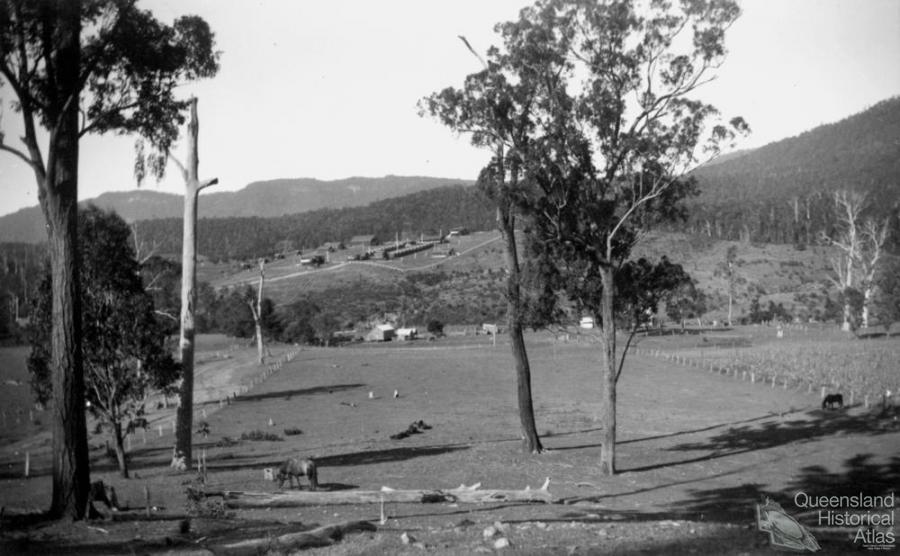
We milked by hand. Twice a day. Every day. We cut weeds with hoes, forked hay onto wagons, stacked it by hand, picked corn by hand. Mum knitted jumpers. Grandparents rotated through the children’s homes. There were no old people’s homes. There were no days off.
We had rainwater tanks, a windmill that pumped water when the wind cooperated, and heavy horses that pulled ploughs, harrows and harvesters. There was no electricity. No phone. One battery radio. We listened to the ABC after milking, “Blue Hills” at dinner, and a serial story after tea.
Our hydrocarbon emissions were minimal - a bit of kerosene in lamps and a few gallons of petrol for the ute that went to town once a fortnight.
But we had cows. Horses. Pigs. Belching, breathing, methane-producing livestock everywhere.
And the climate? It looked very much like it does today. Frosts, floods, droughts, storms, heatwaves. Winter was hard. Cows produced less milk. Frost bit the grass before sunrise.
Food was expensive. Labour was cheap. Most people worked the land. There was little surplus.
Then came the post-war revolution.
Machines arrived. Reliable fuel arrived. What had once taken muscle, daylight and luck could now be done with engines and timing. Tractors replaced horses. Steel replaced timber. Farms produced real surplus. Food prices began their long decline. Cities expanded. Abundance, once fragile and local, became able to get bigger on a grand scale..
And because Viv had lived through that transformation, he understood exactly what had made it possible - and how easily it could be undone.
Years later, when governments began mandating ethanol and diverting food crops into fuel, he saw more than a policy debate. He saw an echo.
As he wrote:
The global demand for biofuels has led to deforestation with the inevitable release of significant amounts of smoke and carbon dioxide. Millions of acres of monoculture plantations are spreading across the globe on land once teeming with bush and wildlife. And not a peep of protest from green zealots.
This is biofuel lunacy. There is no moral, scientific or economic justification to legislate ethanol folly.
The hungry horses are back, but now they live in upper-class stables in the green leafy suburbs. And half the farm is now covered by solar panels and many birds and bats have been sliced by the whirling blades.
He had seen what hungry horses did to farm output. He had seen what mechanisation did to human prosperity.
So his warnings were never abstract.
They were memory speaking.
Viv knew what “green energy” looked like before tractors, before cheap diesel, before hydrocarbon abundance transformed food production and freed human labour. He had forked the hay, milked the cows, watched the frost settle, and listened to the windmill creak when the breeze failed.
He did not argue from ideology.
He argued from lived experience.

From frostbitten fingers and long days in the paddock. From understanding exactly how much labour it once took to produce what now arrives effortlessly on supermarket shelves.
He reminded us that progress is fragile. That abundance is engineered. That ideology cannot plough a paddock.
Viv Forbes was a scientist, a farmer, and a realist. We were fortunate to have had him here.
His words remain.
And perhaps the best way to honour him is exactly as he would have preferred:
Question everything. Follow the evidence. And always keep a diesel in the shed.
And if he were reading this now, I suspect he would wave away the fuss, tell us to get back to work - and quietly check that the diesel drum was full.


