

Civilisation is not what we create. It is what we do when someone needs a hand to keep going.
But let's face it, shit happens.
" What a healed bone, the smell of leather, and a soldier’s burden reveal about who we are - and who we may forget to be."
I tended to think of civilisation in terms of inventions – whether it is the wheel, the plough, or that phone so many are glued to all day.
We had a recent situation when one of our readers had a fairly unpleasant encounter with a frightened horse he had rescued, and the poor creature hit out in panic and fear.
He ended up at risk of losing his spleen and was in bad shape for a while... but, due to care from those around him, he is back " in the saddle again. "
But it took a team of devoted family members, lots of encouraging support from fellow bloggers and his own incredible determination that he is on the road to recovery. No, he will never be as he was. But he is better off than he might have been.
You see, true civilisation isn’t measured in tools or technology. It’s measured in what we do for one another. It’s in the instincts we carry, and the sacrifices we make. And maybe ... just maybe ... it’s in something as quiet and human as staying with the wounded when everyone else runs. In an age obsessed with moving fast and recording everything, it’s worth asking: do we still remember how to carry someone?
Years ago, someone asked the anthropologist Margaret Mead what she considered to be the first sign of civilisation in an ancient culture. They expected her to point to tools - fishhooks, clay pots, grinding stones - the usual things we might expect her to say.
But Mead didn’t name an object. She named an act.
She said the first sign of civilisation was a healed femur - the thick thighbone that connects hip to knee. In the animal kingdom, a broken leg is a death sentence. You can’t run from predators, you can’t forage for food, you can’t get to water. A broken leg means you're done for.
But a femur that has healed means someone stayed behind. Someone stopped fleeing. Someone bound the wound, carried the fallen, brought them food and water, protected them through recovery. Someone gave of themselves - their time, strength, and care - so that another might live.
That’s not instinct. That’s not utility. That’s civilisation.
Margaret Mead (1901–1978) was an American cultural anthropologist. Her work focused on how culture - not just biology - shapes human behaviour.
Her most famous book, Coming of Age in Samoa (1928) showed how different human development could be in other cultures.
She once said:
“Never doubt that a small group of thoughtful, committed citizens can change the world. Indeed, it is the only thing that ever has.”
And yet, today, I wonder how far we’ve drifted from that simple truth. The first sign of civilisation was not cleverness: it was care. But somewhere along the line, we became " cleverer" than we are kind.
We now live in a time where a person can be beaten in the street while others lift their phones, not their hands.
We capture suffering, broadcast it, hashtag it - but many don’t stop it. Cameras roll while lives are lost or horribly damaged. Pain is packaged for entertainment. Sure, while some use cameras to amplify calls for justice, ( think footage from the liberation of prisoners from Auschwitz for example ) the instinct to help directly is what defines us.
Seeing someone beaten on a street and reaching for a phone to record the event seems somehow abhorrent to me. Is that what we call civilised?
Here’s the irony: we often describe war as uncivilised - a brutal, barbaric failure of humanity. And, yes, in many ways, it is. But just ask any soldier who’s crawled through mud and gunfire to rescue a mate, and they’ll tell you what true civilisation looks like.
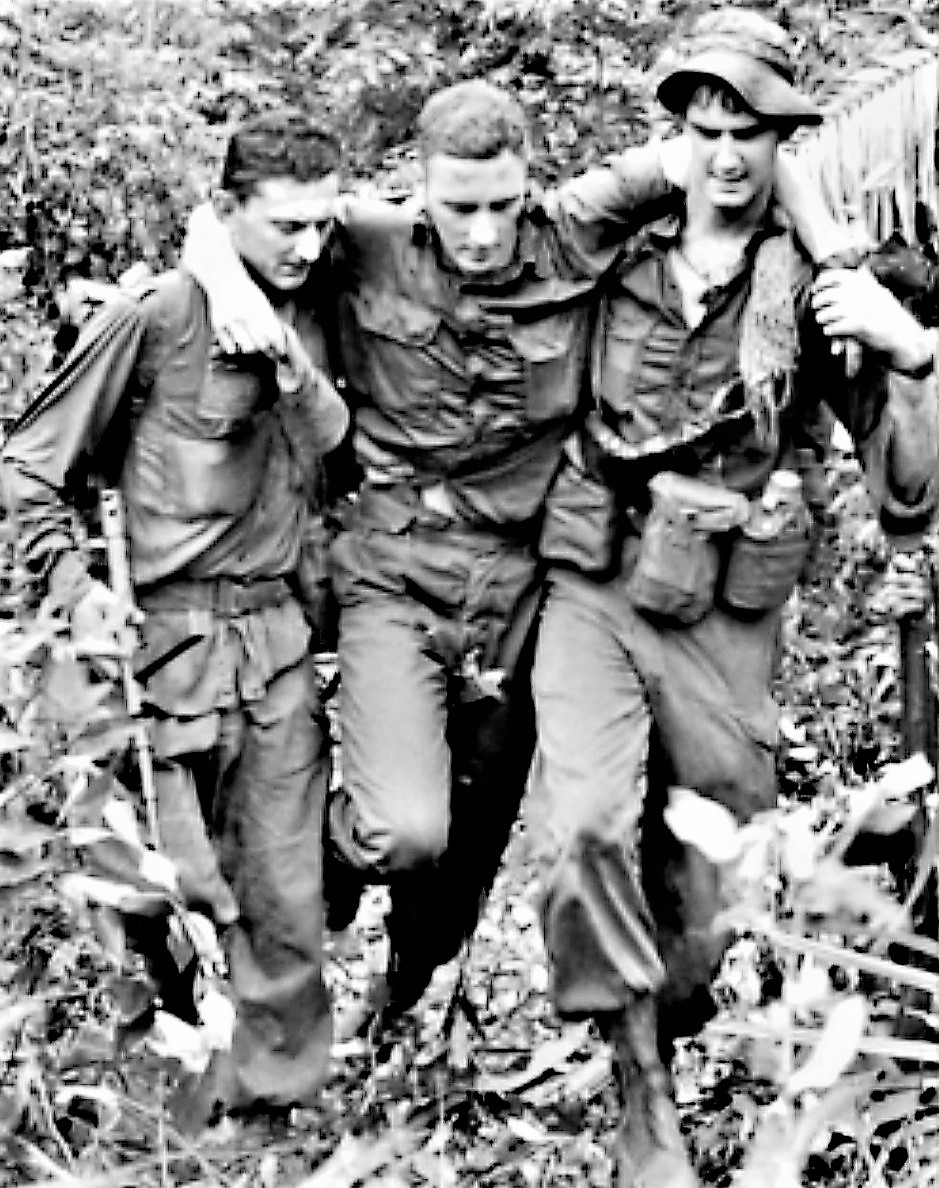
It is loyalty. It is sacrifice. It is mateship that doesn’t flinch under fire. It is carrying someone else’s weight when they can’t go on.
It is risking your life for someone else - not for glory, not for pay, but because you don’t leave your mate behind.
That is the bit that matters. And that is what we are losing as a society. Our desire to help a mate when he is down or in bad shape - emotionally or physically.
Even in war - or perhaps especially in war - the best of humanity can still shine through the worst of circumstances. Where the stakes are highest, the bonds often run deepest. And in that trench, that crater, that battlefield - you will still find the healed femur. The one who was carried. The one who was saved.
And there’s something else we’re in danger of forgetting: the scents of civilisation. The smell of something drifting away.
In a world of sleek screens, hand sanitisers and sterile surfaces, we risk losing the memory of a world rich in life lived. In time to come, no one will remember the smell of an iPad or a mobile phone. No child will grow nostalgic over the scent of touchscreen glass.
But will they remember the scent of freshly mown grass on a summer evening? The sharp sweetness of hay in the barn? The musky richness of saddle leather? The mingled warmth of animal and earth in a barn at dawn? Have they ever smelled these things? Let alone seen them?
Take something as simple as the smell of leather. Why does it stir something so deep in us?
Perhaps because, for generations, leather has wrapped the tools of provision and protection - saddles, boots, belts, scabbards, packs. It smells like readiness. Like responsibility. Like someone prepared to ride out and do what needs doing. Like a person prepared for life and all it can bring - warts and all.
There’s something almost solid and dependable in it - not in the bravado sense, but in the ancient, steady way...
It may feel instinctive ... but it’s also a cultural memory. One that says: "You are not alone. I will carry you if you need me."
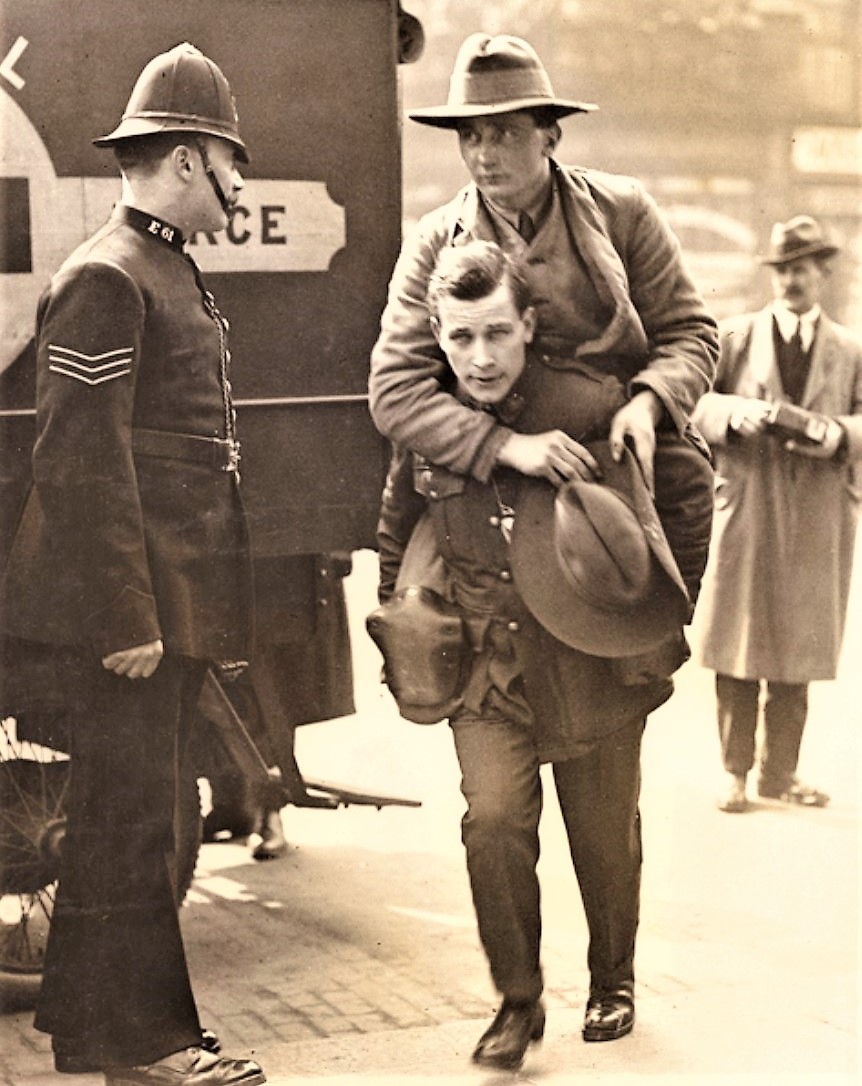
Civilisation begins when we care, give a damn about someone other than ourselves.
Is it something we are taught? Or is it inherited?
Cultures shape what we feel in our bones. Let's face it, the decision to kneel beside the fallen, to carry weight that’s not ours. We were taught them, inherited them and in some ways, they're tribal codes, passed down in story, in scent, in sacrifice. We often speak of tribalism as though it is a flaw in humanity. But perhaps the mistake is not that we have tribes. Perhaps the mistake is forgetting what a tribe was supposed to be.
They’re forged in families, churches, parades, and paddocks ... taught in quiet moments when a child watches a father mend a fence, or a grandmother wraps a meal for someone else or heal a wounded soul with a warm hug. These shared moments of care make up the soul of a people. And when those codes begin to shift, so does the tribe. So does the reflex.
When a people no longer share the same deep belief in loyalty, sacrifice, compassion or kinship, the reflex to stop for the wounded may dull. If your culture taught you to carry your mate, you will crawl through hell to do it. But if that idea is replaced with something else ... something imported or foreign ... then the wounded may lie there alone. Or even filmed and cheered for their pain.
Cultural heritage is vital to a people. What if no one remembers what the smell of leather meant? Or why it mattered that someone once stayed behind to carry a friend?
Civilisation is fragile. It must be taught, felt, and passed on. And if we forget the shape of it .... if we forget the feel of it, the smell of it ...we may wake one day in a crowd, and still be alone. Especially if that crowd is made up of strangers from another tribe.
Our mate Bushie is back in the saddle again, because people cared about him and for him. He can smell the saddle leather, smell the horses he loves and be grateful to the people who carried him when he needed them most.
That my friends is civilisation.


